Iliff School of Theology
The Iliff Difference
Where Sacred Wisdom Becomes World-Changing Action
Pursuing a degree at Iliff is like accepting an invitation to explore the deepest questions of faith, justice, and human meaning through a lens that’s both academically rigorous and personally enriching.
Designed for curious minds and passionate hearts, our flexible, interdisciplinary curriculum empowers you to chart your own path. Whether you’re dedicated to strengthening your leadership skills, committed to creating social change, or seeking deep spiritual growth, a degree from Iliff will accelerate your personal and professional development.
Our degrees
The Master of Arts, The Master of Divinity
& The Doctor of Ministry
A strength of Iliff’s degree programs is that students can choose their own pace, taking courses full-time or spreading them out to fit their schedule.
Master of Arts
The Master of Arts (MA) offers a broad and flexible curriculum that allows students to explore religious and theological studies through various lenses.
Whether you’re interested in academic research, social justice, or spiritual development, our MA program provides the tools and support needed to pursue your passions.
Iliff’s interdisciplinary approach integrates diverse perspectives and encourages critical thinking, enabling students to engage deeply with complex issues.
Our MA graduates are well-equipped for careers in education, non-profits, and further academic study.
Master of Divinity
The Master of Divinity (MDIV) prepares students for effective and collaborative leadership through rigorous academics, cultural and ethical analysis, spiritual formation, and practical experience.
This graduate professional education will strengthen, broaden, and deepen your existing capacity to lead, serve, and inspire in the challenging religious and community settings you will find yourself during your lifelong vocational journey.
Our MDiv graduates are well-equipped for careers in non-profits, religious leadership, and hospital or military chaplaincy.
Doctor of Ministry
The Doctor of Ministry (DMin) program is designed for experienced professionals seeking to enhance their leadership and research skills to address contemporary challenges.
Through a flexible hybrid model that combines online learning with on-campus intensives, the DMin equips students with advanced research methodologies and practical skills, culminating in a final project that applies new insights to real-world contexts.
Online & Hybrid Courses
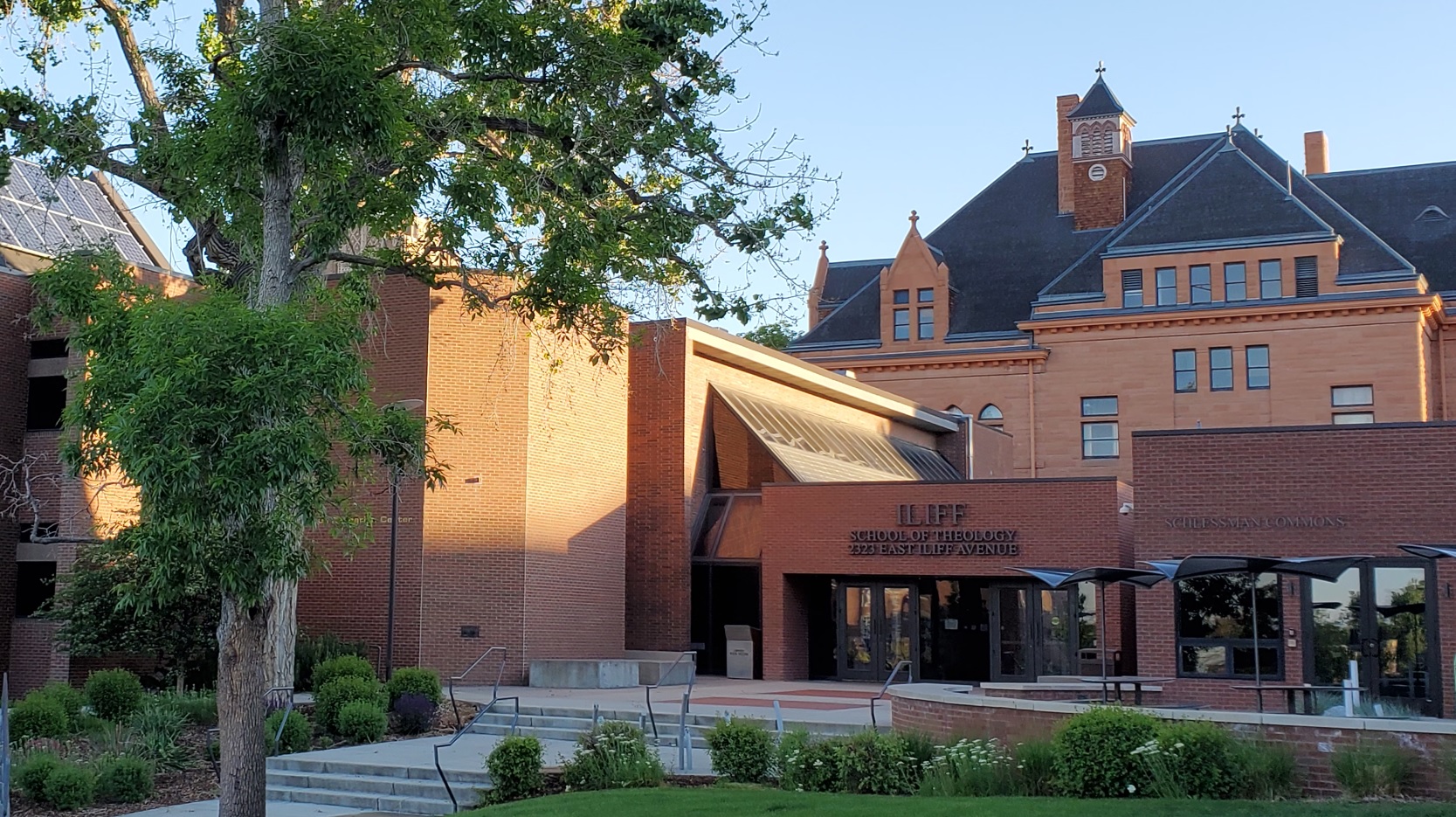
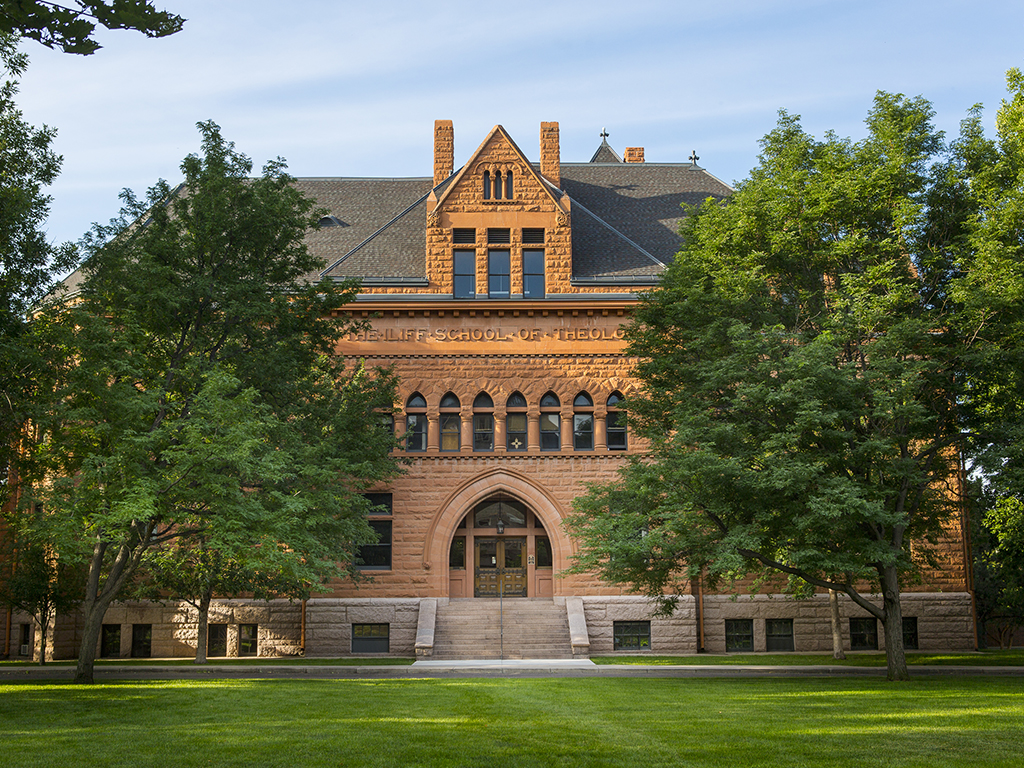
The Iliff campus is located in beautiful Denver, Colorado.
Define Your Focus
Choose a Concentration that Resonates
Iliff’s approach to concentrations is deeply rooted in its commitment to providing a personalized and transformative educational experience that aligns with our commitment to advocating freedom, fostering resilience, and empowering students to pursue justice in their careers and vocations.
Embodied Spirituality
Description
This concentration prepares learners to understand and assess the spiritual dimensions of life in its many embodied forms. With particular attention to both historic and contemporary contextualized understandings of spirituality, this concentration explores the intersections of spiritual life with communities of racial and cultural identity, ritual and meditative practices, material culture, sexuality, and the natural world. Critical perspectives of spirituality can be a source of resistance in situations of oppression, of communal strength in times of change, and individual grounding in times of struggle. Skills in teaching spiritual practices, leading rituals, and companioning the spiritual life will allow graduates to engage in a variety of consultative, reflective, and leadership practices related to embodied spirituality.
Social Justice and Ethics
Description
This concentration engages learners in a complex interdisciplinary analysis of historical and contemporary social justice struggles and movements. Students will identify and critically evaluate the symbolic systems, power structures, ideologies, values, and religious meanings and practices at play in events and interactions, institutional and social structures, ethical judgments, and living communities, and articulate and enact a vision for increased social justice in these contexts. With a focus on sustainable and community-based practice, the concentration is designed to help people who want to develop an inclusive, collaborative, and justice-based social justice leadership with the cultural capacity and organizational skills necessary for domestic and international religious organizations, diverse non-profit settings, government agencies, educational institutions, the media, and various business and professional contexts.
Professional Ministries in Context
Description
This degree concentration is designed to help people enhance and develop inclusive and justice-oriented ministries in the 21st century responsive to particular contexts and communities. Drawing on Iliff’s historic heritage in the United Methodist tradition and on the heritage of other religious, spiritual, and non-religious traditions, this degree is designed for people pursuing ordained, board-certified, and/or endorsed ministries in congregational, chaplaincy, and religious non-profit contexts. Students will learn a comprehensive range of responsibilities, skills and capacities – intellectual and affective, individual and corporate, ecclesial and public – that inform and support a life of prophetic religious and spiritual leadership.
Courses required for ordination in the United Church of Christ, Episcopal Church, Disciples of Christ, Unitarian Universalist Association, Presbyterian Church USA, and the United Methodist Church are offered on regular rotation.
Religion, Trauma, and Healing
Description
This concentration engages interdisciplinary perspectives on experiences of individual, communal, generational, and historical trauma, including theological, historical, psychological, cultural, and literary approaches. Understanding the structural forces, power dynamics, colonizing practices, ideological and religious beliefs, epidemiological and ecological crises, and psychological factors contributing to traumatic experience will help students recognize, understand, and support/accompany persons and communities who have experienced trauma. Religious trauma, particularly related to expressions of gender and sexuality rejected by some religious communities, will be a particular focus. The wisdom of historical and contemporary survivors of trauma as well as insight from interdisciplinary research will inform constructive practices of lament, recognition, reparation, and healing.
Ready to make a difference in your community?
This is an exciting step towards your graduate academic journey, and we are here to help you in every step of the process. We invite you to contact us directly, schedule an individual appointment, campus visit, or join us at a future open house or webinar.