

Critical Imagination Summit
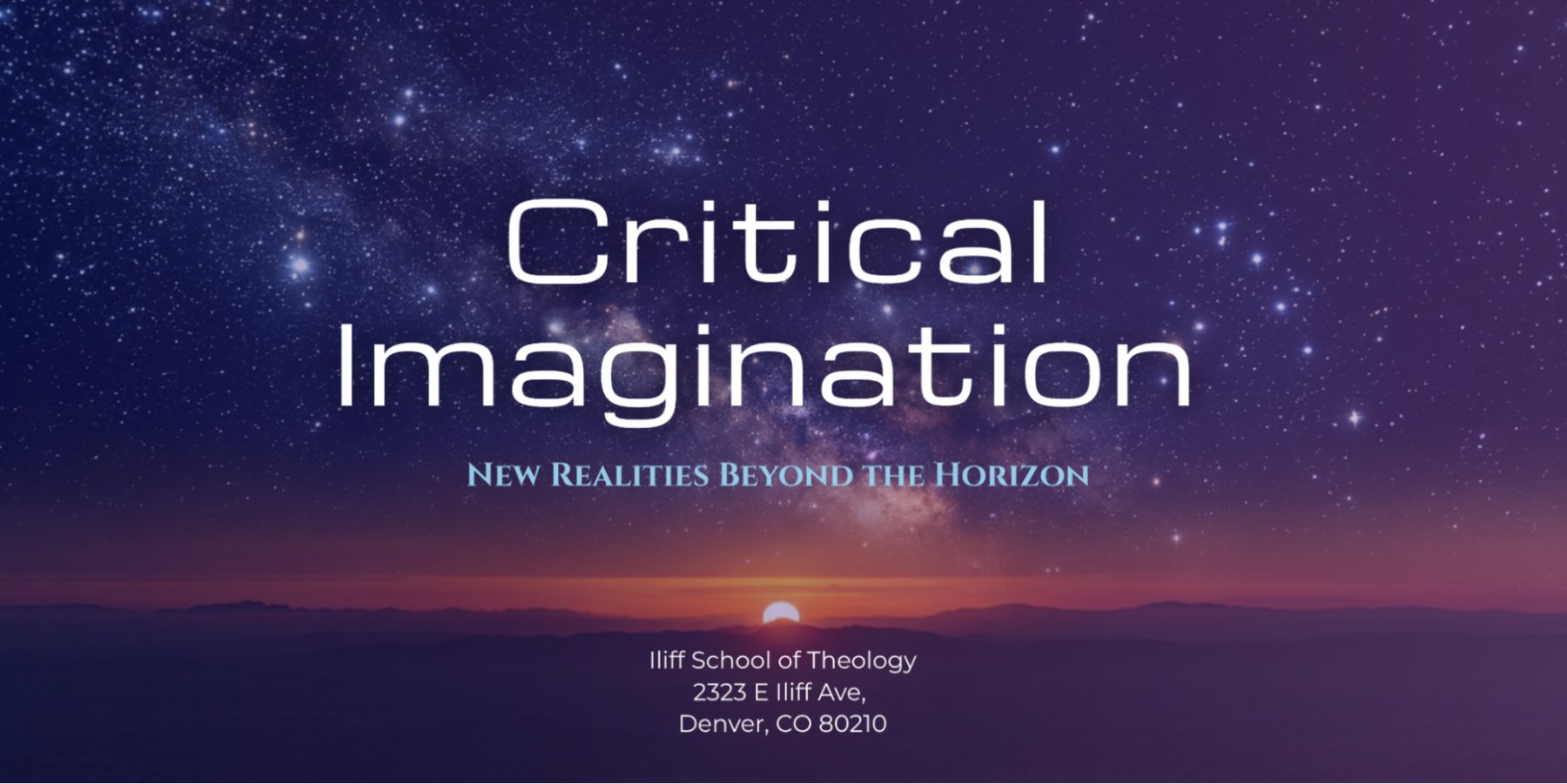
November 20, 2026
Iliff School of Theology
About the Conference
Critical Imagination Summit challenges us to examine our deepest beliefs about innovation, moving beyond user research to understand why we build, who benefits, and how we can collectively transform systems to build genuine trust between humans and machines. Imagination not as escapism, but as a rigorous practice for exposing power, naming harm, and cultivating more just, livable futures.
Attendees will take a systematic approach to developing emerging, technological solutions by interrogating policies, research, narratives, and outcomes.
Preliminary Schedule
8:30 AM – 9 AM: Breakfast
9 AM – 9:15 AM: Welcome by Dr. Philip Butler, Director of Iliff’s AI Institute
9:15 AM – 10 AM: Breakfast side chat w/ Dominique Lamb on Black Futures, the Housing Industrial Complex, and Re-imagining Quality of Life Foundations (Hosted by Dr. Philip Butler)
10:15 AM – 11:45 AM Session 1: Dr. Tomi Oredein (Brite Divinity), Dr. Fallon Wilson (Black Tech Futures) and Christina Hudson (Temple University)“Imagining the Liminal – Converging the Future’s Past on the Present”
11:45 AM – 12:30 PM: Lunch
12:45 PM -2:45 PM Imagination Games – Dr. Gary Green (Twin Cities) and Eliza Sekou “Wiring Up the Future – Gaming Options that Play Beyond the Past”
3 PM -4:30 PM Session 2: Dr. Danie Buhuro (Garrett Evangelical), Dr. Mark Graves (AI and Faith), and Dr. Girim Jung (Wesleyan University)“Shepherding Imagination: Dark and Prophetic Machines”
4:30 PM-4:45 PM: Closing Remarks by Dr. Philip Butler
Stay tuned for additional updates on workshops, featured speakers, and programming.

What is Critical Imagination?
Critical imagination is a sociotechnical approach that asks researchers and designers to rigorously interrogate any domain and surface the social, cultural, ethical, and political implications of technological choices. The inherent inquiry-based approach centers questions about how technological design and implementation shapes, and is shaped by, human systems and experiences.
This approach combines critical analysis (i.e. history, power, values, resources) with creative foresight (scenarios, prototypes, policies) and participatory methods (co?design, stakeholder narratives). Through iterative cycles of imagination, research, prototyping, and reflection, we ask: Who benefits? Who is harmed or excluded? What social practices will this enable or disrupt? What unintended outcomes may occur? How might we change the future today?
The result is a design that is not only usable and useful but accountable and anticipatory—technology built not merely as an instrument but as an active, dynamic partner to human life
Video Links
ICE at Airports, IL Primaries & AfroFuturism as Resistance | The Signal LIVE Ep 13

Want to keep in touch?
Want to be notified when more information is released?
Complete the interest form to hear about speakers, workshops, and registration.